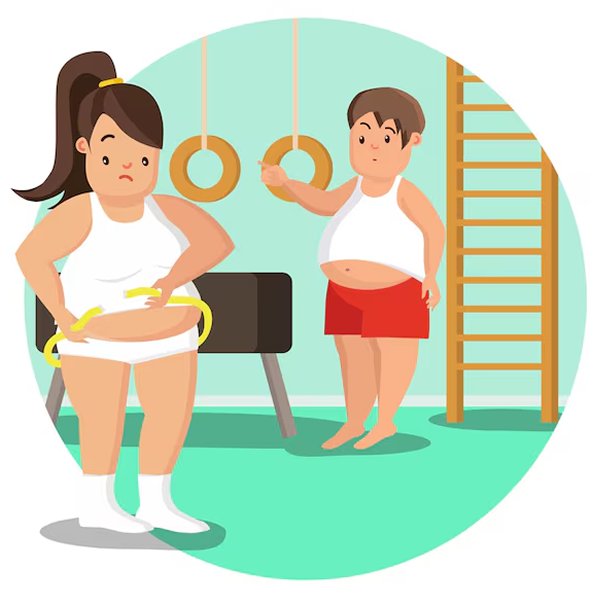
Why Body Fat Percentage Matters
Your body weight is made up of many components. A high weight on the scale doesn't always mean "unhealthy" if that weight comes from dense muscle tissue. Conversely, a person can be at a "normal" weight but have a high percentage of body fat—a condition often called "skinny fat."Body fat percentage is the total mass of fat divided by total body mass, multiplied by 100. It includes both essential body fat (necessary for life and reproductive functions) and storage body fat (fat that protects internal organs and provides energy).
Using the MixMax Calculator to track your body fat allows you to:
- Track Real Progress: Ensure that the weight you are losing is actually fat, not hard-earned muscle.
- Assess Health Risks: High body fat levels, particularly visceral fat, are linked to cardiovascular issues and metabolic disorders.
- Fine-tune Your Training: Whether you are cutting for definition or bulking for strength, knowing your body fat helps you adjust your macros more effectively.
How the MixMax Calculator Works
Our tool utilizes the U.S. Navy Method , a widely respected and non-invasive way to estimate body fat using simple circumference measurements. By entering your height and the measurements of your neck, waist, and (for women) hips, MixMax Calculator applies specialized formulas to provide a reliable estimation of your body composition.Tracking only weight can be misleading. For instance, if you start a new gym routine, you might gain muscle while losing fat. Your weight might stay the same, but your body fat percentage will drop, and your body will look leaner. Using the MixMax Body Fat Calculator helps you see the real progress that the scale hides.
Understanding Body Fat Ranges
Once you receive your results from the MixMax Calculator, you can compare them against these general health categories:
- Essential Fat: (2-5% for Men, 10-13% for Women) Necessary for basic physiological functions.
- Athletes: (6-13% for Men, 14-20% for Women) High muscle definition and peak performance levels.
- Fitness: (14-17% for Men, 21-24% for Women) A lean, healthy, and toned appearance.
- Average: (18-24% for Men, 25-31% for Women) A healthy range for most non-athletes.
- Obese: (25%+ for Men, 32%+ for Women) Increased risk for weight-related health problems.